
M2M refers to technologies that allow wireless and wired systems to communicate with other enabled-devices.

Passenger vehicle sales in India touched a record high of 41.08 lakh units in 2023, growing by 8.3 per cent over the previous year driven by SUVs, which accounted for almost half of the total dispatches from manufacturers to dealers. The record sales have been achieved despite an increase in the average price of vehicles to Rs 11.5 lakh last year as compared to Rs 10.58 lakh in 2022. Market leader Maruti Suzuki, Hyundai Motor India, Tata Motors and Toyota Kirloskar Motor reported their best-ever annual sales in 2023.

'We will see a lot of investments from the private sector.' 'As long as we are not impacted by some global events, I think we will be in a strong place.'

France-based automobile manufacturer Renault and Japan-headquartered Nissan on Monday committed investments of $600 million (around Rs 5,300 crore) in the country 15 years after foraying into the Tamil Nadu automobile industry. The fresh round of investments would witness roll out of six new models between the two companies including -- two electric vehicles -- representing the two global brands, Nissan Global chief operating officer and Member, Alliance Board Ashwani Gupta said in Chennai.
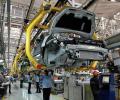
Automobile manufacturers are likely to report strong numbers for the September quarter of Financial Year 2023-24 (Q2 FY24), riding on growth across segments and offset by a marginal drop in overall two-wheeler (2W) volumes. Higher average selling price (ASP) year-on-year (YoY), which was necessitated by price hikes taken by original equipment manufacturers (OEMs), and an improved product mix will also aid revenues and margins. Moreover, commodity prices are down on a YoY basis, leading to higher margins in earnings before interest, taxes, depreciation and amortisation (Ebitda).
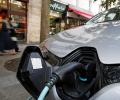
Automobile manufacturers, new and old, as well as ancillary suppliers are set to spend a combined Rs 70,630 crore over the next five years on either entering the electric vehicle segment or stepping up their presence in it. Data culled from announcements made by firms shows India, the world's fifth largest automobile market, is poised to receive one of the biggest capex pushes ever to fuel the transition from internal combustion engines to electric motors and batteries as part of a green drive. The EV push, egged on by the government's emphasis on electric mobility to meet its net zero targets, is expected to yield at least 25 electric vehicles - new ones as well as electrified versions of existing vehicles running on internal combustion engines.

Automotive (auto) and auto ancillary stocks have been in the fast lane thus far in 2023-24 (FY24), with the National Stock Exchange Nifty Auto Index surging nearly 27 per cent, outperforming the Nifty50, which has gained roughly 11 per cent during this period. The top-gear performance of auto stocks at the bourses, according to A K Prabhakar, head of research at IDBI Capital, has been triggered by the premiumisation of products across vehicle manufacturers, which has seen vehicle sales remaining relatively stable. "It is not about higher sales figures now, but about premiumisation.

The index is currently trading at 149 per cent of its historical P/B valuation, surpassing its previous peak of 125 per cent made in 2020-21.

The government is considering the option of inviting fresh applications to bid for the fourth slot which fell vacant after one of the initial candidates who qualified, Hyundai Global Motors, exited from the production-linked incentive (PLI) scheme for advanced chemistry cell battery storage with a capacity of 20 GwH. Earlier, stakeholders had expected that the vacant slot would be offered to waitlisted players ranked on their technical and financial offer. A final decision will be taken soon.

Hyderabad will host India's first ever ePrix on February 11.
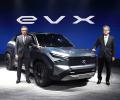
According to Siam data, Indian auto companies sold 982,456 units of utility vehicles in the first half of FY23, a 50.29 per cent growth over the corresponding period last year.

RIL subsidiary Reliance New Energy Solar, Ola Electric, Hyundai Global Motors Company and Rajesh Exports have been approved for receiving incentives under the Rs 18,100 crore Production Linked Incentive (PLI) scheme for battery manufacturing in India, sources said on Thursday. "The ministry had received bids from 10 companies with a capacity of 130 GWh. Reliance, Ola Electric, Hyundai and Rajesh Exports have qualified for ACC batteries," a source said. Other companies which had applied for the PLI scheme for Advanced Chemistry Cell (ACC) batteries were Lucas-TVS, Mahindra & Mahindra, Amara Raja Batteries, Exide Industries, Larsen & Toubro and India Power Corporation Limited.

Operating margins have been the primary driver of corporate earnings in India in recent quarters, despite revenue growth suffering from weak consumer demand. Companies across sectors have reported a sharp improvement in earnings before interest, tax, depreciation, and amortisation (Ebitda) margins over the past two years, benefiting from lower commodity and energy prices. Higher margins more than compensated for slower revenue growth, resulting in double-digit growth in net profit for five consecutive quarters.

Bhavish Aggarwal, the founder of ride-hailing firm Ola who disrupted the electric scooters market in the country, is planning to launch an electric sports car in 2024. The plan will put it in competition with Indian players, such as the Tata group and Mahindra & Mahindra, and global giants like Tesla and Hyundai. Aggarwal, recently, took a group of reporters to the firm's design studio at the Ola campus in Bengaluru where his teams are working on several EVs, including scooters, motorcycles, sedans, and SUVs - and even robotaxis.
The K-shaped economic recovery in India from the pandemic slowdown shows in corporate results as well. The automobile sector, which represents big-ticket consumption, continues to do well and has increased its share in corporate revenues and profits while fast-moving consumer goods (FMCG) companies that sell low-ticket consumer goods are struggling with poor sales and earnings growth. The share of the automobile sector, including makers of auto ancillaries, in corporate net sales rose to a 10-quarter high of 10.05 per cent during July-September 2023 (Q2FY24) from 8.94 per cent a year earlier and 9.75 per cent in Q1FY24.

Recently, TPEM's first born electric concept, Avinya broke cover. The model promises a minimum range of 500 kilometres and advanced technology features, aimed at buyers in India and outside. TPEM, the newly formed entity may also consider a separate dedicated sales channel for the EVs with a distinctive corporate identity once the volumes reach a critical mass and throughput is large enough for the dealers to be profitable, said Chandra. Elaborating further on the hiring strategy he said, "We will hire from everywhere-wherever the talent of the required competency is available."
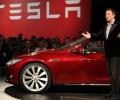
Senior Tesla executives including those from its supply chain are planning to come to India on Wednesday and Thursday for meetings with government officials, including those in the Prime Minister's Office, according to sources. Prashant R Menon, director of Tesla India, did not respond to a specific query on the meetings. Sources say that the executives are coming to see how they can expand and develop local sourcing of components from India for the Tesla car.

The iconic brand is considering petrol powertrains for its entire Indian portfolio, which includes the Jeep Compass, Meridian, Grand Cherokee and Wrangler.

The urban, more sophisticated buyer will favour the BR-V over the Scorpio
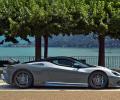
The Battista hyper GT delivers a unique dynamic experience that can be tailored to suit every journey and the pure-electric model will accelerate from 0-100 km/h in less than two seconds - faster than a current Formula 1 car.

Earlier in May, Ford India announced that it had dropped its plans to make electric vehicles (EVs) in India, which it intended to export, under the production-linked incentive scheme (PLI). Ford was among 20 companies that had signed a Champion OEM Incentive Scheme under the PLI project with the government in February this year. The decision comes as a blow for the 4,000-odd employees at Ford India's Maraimalai Nagar plant near Chennai and in Sanand, Gujarat. In September last year, the company had announced that it would exit the India market, which it had entered in 1995 through an on-again, off-again joint venture with Mahindra & Mahindra (they split in 1998, signed a JV in 2019 and split again in December 2020), retailing petrol and diesel brands such as the EcoSport, Figo, Aspire, and Endeavour.

The inaugural Formula E race in Hyderabad is scheduled for February 11 next year, joining the likes of New York, London and Rome on the calendar.

Hyderabad will be the first time a major international racing event
Four companies - Rajesh Exports, Hyundai Global Motors Company, Ola Electric Mobility and Reliance New Energy - are eligible for receiving benefits under the production-linked incentive (PLI) scheme for advanced chemistry cell battery storage, the heavy industries ministry said on Thursday. The allotment was made for a total of 50 GWh of battery capacity to the four successful bidders. These firms, the ministry said, will receive incentives under India's Rs 18,100 crore programme to boost local battery cell production.

Rajesh Karkera/Rediff.com takes the XUV 400, the first electric SUV from the Mahindra stable, for a spin and comes away impressed.

Ford, which had announced to quit the Indian market last year, said it was exploring the possibility of using one of its plants in India to produce electric cars for exports.

Harley Davidson, KTM-Bajaj, M&M make India production base for automobiles to be assembled and sold in China.

American automaker Ford on Thursday said that it had withdrawn plans to manufacture electric vehicles (EVs) in India and it won't invest in the country under the performance-linked incentive (PLI) scheme. "After careful review, we have decided to no longer pursue EV manufacturing for exports from any of the Indian plants. "We remain grateful to the government for approving our proposal under the PLI and for being supportive while we continued our exploration. "Ford India's previously announced business restructuring continues as planned, including exploring other alternatives for our manufacturing facilities.
India's traditional companies are now moving full scale into the renewable and alternative energy space that had been dominated by smaller players over the past decade. Companies such as government-owned NTPC and the Adani and the Tata groups restructured their businesses well in time to become major players in the green space. At the same time, other conventional companies, such as Larsen & Toubro and Reliance Industries Ltd (RIL), which have a presence both in the energy sector as well as myriad other activities - construction, technology and retailing - are tying up with new-age companies to hitch a ride to a greener path.

The Mercedes-Benz GLC 220d 4MATIC, the SUV former Tata Sons chairman Cyrus Mistry was riding in on Sunday, comes with various safety features to protect passengers but just like other high-end cars, it has no airbags for rear seats.

M&M was the top gainer in the Sensex pack, zooming over 5 per cent, followed by PowerGrid, ITC, L&T, Tech Mahindra, Titan and Tata Steel. Nifty rallied 169.80 points to 18,161.75.

Even as India's passenger-vehicle sales touched a record high of 3.9 million units in 2022-23, growing 27 per cent over the previous financial year, the country's largest carmaker, Maruti Suzuki India (MSIL), said on Monday uncertainties in the electronic-component supplies might affect production in FY24. MSIL said the shortage of electronic components had some impact on production in FY23. "The company took all possible measures to minimise the impact.

New electric and hybrid vehicles on display as manufacturers plug into environment-friendly segment.

Among the cars unveiled at the Auto Expo on Wednesday was Mahindra and Mahindra's e-KUV for Rs 8.2 lakhs ex-showroom Delhi. With a single charge range of 150 km and a 55 min fast charging upto 80 pc, it was both a head-turner and a conversation-starter.

Take a look at these dazzling cars of the future.

Both are finding it difficult to sell one each of their plants -- Chennai Maraimalai Nagar (Ford) and Talegaon near Pune (GM) -- and are finding the road blocked by employee severance snarl-ups, report Sohini Das and Shine Jacob.

'Some of the launches may get deferred due to the semiconductor shortage, which is unlikely to get resolved before the second half of 2022.'

While home-grown firms like Tata and Mahindra have been actively participating in the government's e-mobility mission, by launching electrified versions of their existing models, the global firms believe electric is not the best solution for a country where the primary source of power generation is coal, and where infrastructure is a big impediment.

Whether it is protecting its turf in its core utility vehicle segment through new model launches, or stepping up investment in electric vehicles, the Anand Mahindra-led firm is leaving nothing to chance
Mahindra Reva has developed technologies that will be seen for first time in its new car, NXR.
